April 30th, 2026
Why Allergy Season Feels So Hard on Kids
Allergy season can feel relentless for some kids.
The constant sneezing, runny nose, itchy eyes, and congestion can affect how they sleep, how they focus, and how they move through their day. For many families, antihistamines become the default just to get through the season, and while they can absolutely provide short-term relief, they don’t address why the body is reacting so strongly in the first place.
To understand that, we need to look a little deeper at what’s actually happening inside the body.
When your child is exposed to allergens like pollen, dust, or mold, their immune system responds by releasing histamine. Histamine is what drives those familiar allergy symptoms, but it’s not just acting locally in the nose and eyes; it’s part of a broader immune and inflammatory response happening throughout the body. In some children, that response is amplified, which is why allergy season can feel so intense and difficult to manage.
What many parents don’t realize is that this reaction is often connected to the health of the body’s barriers, especially the gut and the lining of the respiratory tract. When these barriers are strong, the immune system is better able to tolerate everyday exposures. But when they become more permeable or irritated, the immune system can become more reactive, releasing more histamine and triggering stronger symptoms.
This helps explain why some children seem to struggle more than others, even in the same environment.
Over time, factors like ultra-processed foods, lower fiber intake, environmental exposures, and nutrient deficiencies can contribute to a more sensitive system. When you layer that on top of seasonal allergens, the body can feel overwhelmed, and symptoms follow.
So instead of only asking how to suppress the symptoms, we can begin to support the system underneath.
The goal is not perfection. It’s to help the body become less reactive over time.
Supporting the Body During Allergy Season
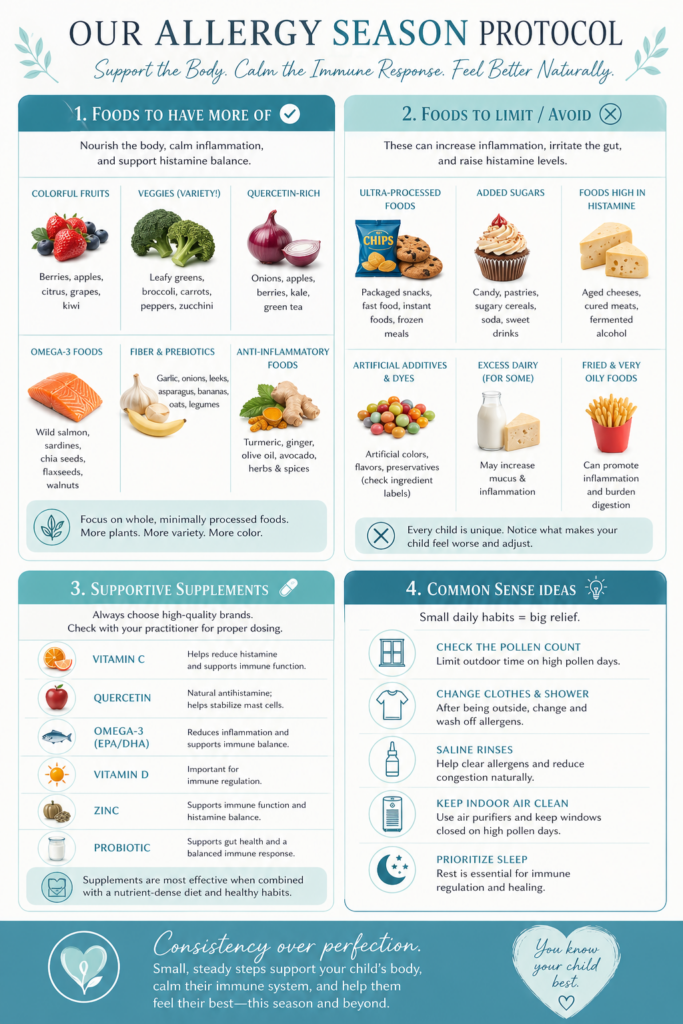
One of the most powerful places to start is with food. A diet centered around whole, minimally processed foods helps calm inflammation and supports the gut microbiome, which plays a key role in immune balance. Increasing colorful fruits and vegetables, healthy fats, and fiber-rich foods gives the body the nutrients it needs to regulate its response more effectively.
Certain nutrients are especially helpful during allergy season. Vitamin C helps stabilize histamine levels and can be found in foods like berries, citrus, and peppers. Quercetin, a natural compound found in apples, onions, and leafy greens, supports the body’s ability to regulate inflammation. Omega-3 fats, found in foods like salmon, chia seeds, and flax, help reduce overall inflammatory load. When these foods are included consistently, they can make a meaningful difference in how the body responds.
For many families, targeted supplementation can also be a helpful layer of support, especially during peak allergy season. Nutrients like vitamin C, quercetin, zinc, and omega-3s are commonly used to support immune balance and histamine regulation. Vitamin D is also important, particularly for children who may be deficient. In some cases, probiotics can help support the gut, which in turn supports the immune system.
If you’re using supplements, quality and appropriate dosing matter, and it’s always best to tailor this to your child’s needs. I’ve linked some of the options I commonly use below if you’d like a starting point.
Reducing the Overall Load
In addition to supporting the body internally, small external shifts can also make a difference. During allergy season, reducing allergen exposure can help lower the overall burden on the immune system. Simple habits like changing clothes after outdoor play, washing hands and face, keeping windows closed on high pollen days, and using air filtration when needed can all help reduce that daily load.
These aren’t drastic changes but they add up.
The Big Picture
Allergy season doesn’t have to feel like something your child just has to push through every year.
When you begin to support the body, the gut, the immune system, and the overall load, you often see a shift. Symptoms can become more manageable, recovery can be quicker, and kids simply feel better in their bodies.
Start small. Choose one area to focus on this week.
Because those small, consistent shifts are what create lasting change.